 More info

Agricola: Family Edition (Stand Alone Game)
Sale
Out of Stock - Backorder Available

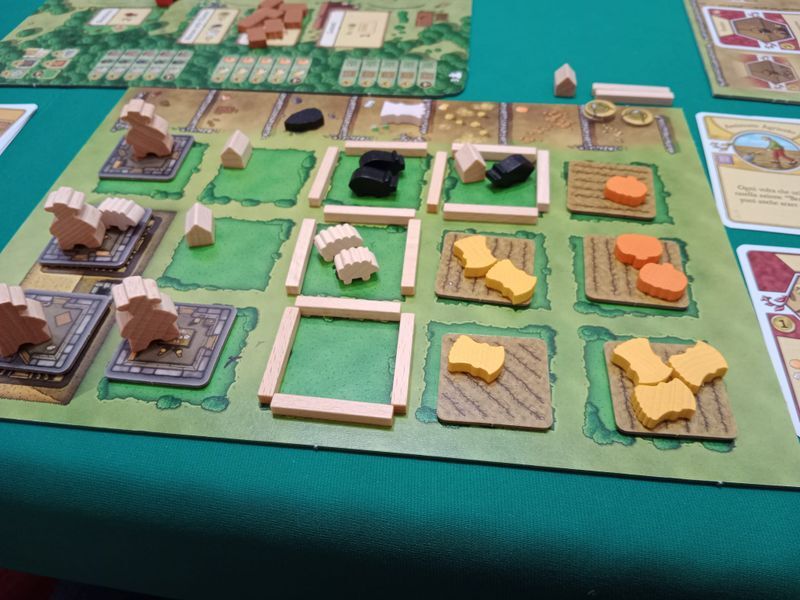
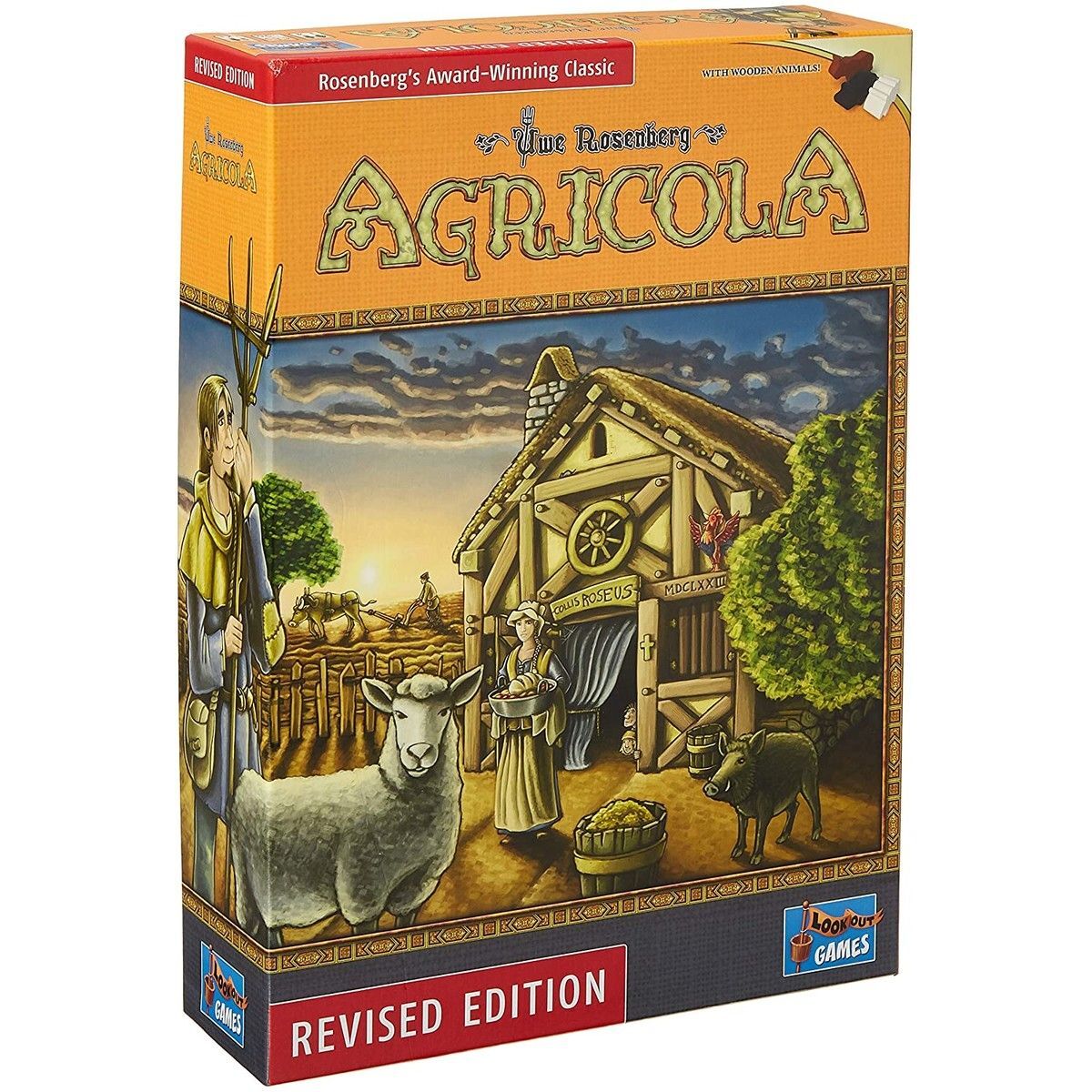
Agricola Revised Edition is a critically acclaimed farming and worker placement board game in which players develop a modest rural homestead into a thriving agricultural estate. Designed by Uwe Rosenberg, Agricola challenges players to balance the demands of farming, family life, resource management, and long-term planning as they compete to build the most prosperous and well-rounded farm.
Set in rural Europe during the 17th century, Agricola begins with each player controlling a farmer and their spouse living in a simple wooden shack. With little more than their home and a small plot of land, players must gather resources, cultivate fields, raise livestock, improve their dwelling, and expand their family. Every decision matters, and the constant need to provide food for your household creates an engaging strategic challenge throughout the game.
Supporting 1–5 players, with a playing time of approximately 30–150 minutes depending on the number of participants, Agricola Revised Edition offers a substantial strategy gaming experience suitable for players aged 12 and over. Its combination of worker placement, resource management, hand management, and agricultural development has made Agricola one of the most recognisable titles in modern strategy board gaming.
From Humble Beginnings to a Prosperous Farm
At the beginning of the game, your farming family consists of just two adults living in a basic wooden house. Your farmyard is largely undeveloped, and there is plenty of work to be done. Fields must be ploughed, crops must be planted, animals need somewhere to live, and your family must have enough food to survive each harvest.
Each round, players assign their family members to available action spaces on the game board. These actions represent the many tasks involved in developing a successful farm, including gathering wood, clay, stone, and reeds; ploughing fields; sowing crops; building fences; constructing stables; collecting livestock; and improving the family home.
Initially, you have only two family members available to perform actions. This creates an immediate challenge: there are always more useful things to accomplish than there are workers available to do them. Choosing which actions to prioritise, and anticipating which spaces your opponents might occupy, forms the heart of Agricola's strategic gameplay.
As the game progresses, you can expand your house and welcome additional family members. A larger family provides more workers and therefore more opportunities to develop your farm each round. However, additional family members also require more food, creating an important balance between increasing your workforce and maintaining the resources necessary to support it.
Develop Your Agricultural Estate
Agricola provides several interconnected paths towards building a successful farm. You might concentrate on establishing productive crop fields, constructing fenced pastures for livestock, expanding your home, or developing a balanced combination of agricultural activities.
Crop farming begins by ploughing fields and sowing grain or vegetables. Successfully cultivated fields provide valuable food and resources over subsequent harvests, rewarding players who invest early in agricultural development. Careful planning is required to ensure that your crops provide sufficient returns while leaving enough actions available for other essential tasks.
Animal husbandry introduces another important element of farm management. Sheep, wild boar, and cattle can become valuable parts of your agricultural operation, but animals require appropriate accommodation. Constructing fences and stables allows you to keep livestock, develop breeding opportunities, and diversify your farm's production.
Players must also consider the layout of their farmyard. Every available space represents an opportunity to establish fields, construct rooms, create pastures, or develop other agricultural features. Making efficient use of the land is essential, particularly as the game rewards players for developing a varied and productive farm rather than concentrating exclusively on a single activity.
Feed Your Family at Every Harvest
One of Agricola's defining features is the constant pressure of feeding your household. At designated points throughout the game, players must provide enough food for their family members. Failure to do so results in penalties that can significantly affect the final score.
This creates an engaging tension between immediate survival and long-term development. Building an additional room might allow your family to grow, but gathering the materials required could mean delaying food production. Expanding your livestock holdings may provide future benefits, but you must still find enough food to survive the next harvest.
The need to feed your family ensures that even seemingly straightforward decisions carry meaningful consequences. Players must continually evaluate whether to invest in future opportunities, improve their existing infrastructure, or secure the resources necessary to meet their immediate obligations.
Worker Placement and Strategic Competition
At its core, Agricola is a worker placement strategy game. Players take turns placing family members onto action spaces, with each available space generally accommodating only one worker during a round. Once another player claims an action, it becomes unavailable to everyone else until the next round.
This creates direct competition for important resources and opportunities without relying on traditional combat mechanics. A player who needs wood to expand their house may discover that an opponent has already taken the most valuable wood-gathering action. Similarly, a carefully planned farming strategy may need to change when another player occupies a crucial space.
As additional action spaces become available during the game, players gain access to new opportunities and more advanced methods of developing their farms. Understanding the timing of these opportunities, and positioning yourself to take advantage of them, is an important part of successful play.
Occupations and Improvements
Agricola also incorporates card-based strategic development through occupations and improvements. These cards provide additional abilities, opportunities, and benefits that can influence how you develop your farm.
Occupations represent specialised skills and expertise that can support particular agricultural strategies, while improvements provide useful equipment, structures, and other advantages. The interaction between these cards and the available worker placement actions creates opportunities for creative planning and different approaches to farm management.
With 120 cards included, Agricola Revised Edition provides considerable variety between games. Different card combinations encourage players to explore alternative strategies, adapt their plans, and discover new ways to manage the competing demands of their farms.
Effective hand management is important because playing cards requires actions and, in some cases, additional resources. Players must decide which cards are worth developing, when to introduce them, and how they fit into the broader strategy of building a successful farm.
Multiple Paths to Victory
Unlike games that reward players for specialising in a single area, Agricola encourages the development of a balanced and diversified farm. At the end of the game, players score points for various aspects of their agricultural estate, including cultivated fields, livestock, pastures, improvements, and family development.
Neglected areas can limit your final score, so a successful strategy generally requires attention to several different aspects of farm management. Players must determine how to balance these competing priorities while making the most of their limited actions and available resources.
This creates a rewarding strategic puzzle in which every decision contributes to the final result. A carefully managed farm can develop from a humble wooden shack into a productive agricultural estate, but achieving that transformation requires planning, flexibility, and efficient use of your workforce.
Solo and Multiplayer Farming
Agricola Revised Edition supports solo play as well as multiplayer games for up to five participants. The solo experience allows players to concentrate on developing an efficient farm while managing the game's agricultural and feeding challenges.
In multiplayer games, competition for action spaces introduces additional complexity. Players must consider not only their own plans but also the likely intentions of their opponents. The available resources, timing of actions, and development of competing farms all influence the decisions made throughout the game.
The variable playing time makes Agricola suitable for different gaming situations. Smaller player counts generally offer a more focused experience, while games with additional participants create greater competition for valuable actions and resources.
The Revised Edition
Agricola Revised Edition presents the celebrated farming strategy game in an updated format, bringing together its familiar worker placement mechanics, agricultural development, and family management challenges.
The included game boards, player boards, cards, cardboard components, and wooden pieces provide everything required to establish and develop your farm. Wooden resources and animal pieces help represent the changing state of each player's agricultural estate as fields are cultivated, livestock are acquired, and families expand.
This is the base game, providing a complete Agricola experience without requiring additional expansions. It is an excellent starting point for players discovering Agricola for the first time, while also offering a substantial strategy game for experienced enthusiasts of worker placement and resource management.
Why Play Agricola?
Agricola is particularly appealing to players who enjoy games where careful planning, efficient resource allocation, and difficult decisions determine success. Its agricultural theme provides an intuitive foundation for a sophisticated strategy game, while the need to feed your family introduces a constant sense of urgency.
The combination of worker placement, farming, livestock management, and card-driven development creates a game with considerable strategic depth. Different approaches to agricultural development, changing action priorities, and the interaction between occupations and improvements provide strong replay value.
Whether you're cultivating your first field, constructing a new pasture, expanding your family home, or preparing for the next harvest, every action contributes to the development of your farm. Agricola Revised Edition delivers a rewarding and challenging experience for players who appreciate thoughtful economic strategy games.
Key Features:
Game Details:
Box Contents:
Strategy Tips: In Agricola, maintaining a reliable food supply is essential. Consider establishing food production early so you can concentrate on expanding your farm later in the game. Growing your family provides additional actions, but make sure you have sufficient accommodation and food to support the extra workers. Pay attention to your opponents' likely action choices, particularly when several players need the same resources. Finally, remember that Agricola rewards a well-developed farm, so avoid neglecting important areas of agricultural production when planning your long-term strategy.
Please Note: This product is Agricola Revised Edition, a complete standalone board game. Additional Agricola expansions and accessories are sold separately. The contents listed above are based on the distributor's supplied product information.
| SKU | LKGLK3515 |
| Barcode # | 4260402315287 |
| Brand | Lookout Games |
| Shipping Weight | 2.3000kg |
| Shipping Width | 0.320m |
| Shipping Height | 0.240m |
| Shipping Length | 0.090m |
| Shipping Cubic | 0.006912000m3 |
Help other Milsims Games users shop smarter by writing reviews for products you have purchased.
Write a reviewMake 4 interest-free payments of $18.49 fortnightly and receive your order now.
Agricola Revised Edition is a critically acclaimed farming and worker placement board game in which players develop a modest rural homestead into a thriving agricultural estate. Designed by Uwe Rosenberg, Agricola challenges players to balance the demands of farming, family life, resource management, and long-term planning as they compete to build the most prosperous and well-rounded farm.
Set in rural Europe during the 17th century, Agricola begins with each player controlling a farmer and their spouse living in a simple wooden shack. With little more than their home and a small plot of land, players must gather resources, cultivate fields, raise livestock, improve their dwelling, and expand their family. Every decision matters, and the constant need to provide food for your household creates an engaging strategic challenge throughout the game.
Supporting 1–5 players, with a playing time of approximately 30–150 minutes depending on the number of participants, Agricola Revised Edition offers a substantial strategy gaming experience suitable for players aged 12 and over. Its combination of worker placement, resource management, hand management, and agricultural development has made Agricola one of the most recognisable titles in modern strategy board gaming.
From Humble Beginnings to a Prosperous Farm
At the beginning of the game, your farming family consists of just two adults living in a basic wooden house. Your farmyard is largely undeveloped, and there is plenty of work to be done. Fields must be ploughed, crops must be planted, animals need somewhere to live, and your family must have enough food to survive each harvest.
Each round, players assign their family members to available action spaces on the game board. These actions represent the many tasks involved in developing a successful farm, including gathering wood, clay, stone, and reeds; ploughing fields; sowing crops; building fences; constructing stables; collecting livestock; and improving the family home.
Initially, you have only two family members available to perform actions. This creates an immediate challenge: there are always more useful things to accomplish than there are workers available to do them. Choosing which actions to prioritise, and anticipating which spaces your opponents might occupy, forms the heart of Agricola's strategic gameplay.
As the game progresses, you can expand your house and welcome additional family members. A larger family provides more workers and therefore more opportunities to develop your farm each round. However, additional family members also require more food, creating an important balance between increasing your workforce and maintaining the resources necessary to support it.
Develop Your Agricultural Estate
Agricola provides several interconnected paths towards building a successful farm. You might concentrate on establishing productive crop fields, constructing fenced pastures for livestock, expanding your home, or developing a balanced combination of agricultural activities.
Crop farming begins by ploughing fields and sowing grain or vegetables. Successfully cultivated fields provide valuable food and resources over subsequent harvests, rewarding players who invest early in agricultural development. Careful planning is required to ensure that your crops provide sufficient returns while leaving enough actions available for other essential tasks.
Animal husbandry introduces another important element of farm management. Sheep, wild boar, and cattle can become valuable parts of your agricultural operation, but animals require appropriate accommodation. Constructing fences and stables allows you to keep livestock, develop breeding opportunities, and diversify your farm's production.
Players must also consider the layout of their farmyard. Every available space represents an opportunity to establish fields, construct rooms, create pastures, or develop other agricultural features. Making efficient use of the land is essential, particularly as the game rewards players for developing a varied and productive farm rather than concentrating exclusively on a single activity.
Feed Your Family at Every Harvest
One of Agricola's defining features is the constant pressure of feeding your household. At designated points throughout the game, players must provide enough food for their family members. Failure to do so results in penalties that can significantly affect the final score.
This creates an engaging tension between immediate survival and long-term development. Building an additional room might allow your family to grow, but gathering the materials required could mean delaying food production. Expanding your livestock holdings may provide future benefits, but you must still find enough food to survive the next harvest.
The need to feed your family ensures that even seemingly straightforward decisions carry meaningful consequences. Players must continually evaluate whether to invest in future opportunities, improve their existing infrastructure, or secure the resources necessary to meet their immediate obligations.
Worker Placement and Strategic Competition
At its core, Agricola is a worker placement strategy game. Players take turns placing family members onto action spaces, with each available space generally accommodating only one worker during a round. Once another player claims an action, it becomes unavailable to everyone else until the next round.
This creates direct competition for important resources and opportunities without relying on traditional combat mechanics. A player who needs wood to expand their house may discover that an opponent has already taken the most valuable wood-gathering action. Similarly, a carefully planned farming strategy may need to change when another player occupies a crucial space.
As additional action spaces become available during the game, players gain access to new opportunities and more advanced methods of developing their farms. Understanding the timing of these opportunities, and positioning yourself to take advantage of them, is an important part of successful play.
Occupations and Improvements
Agricola also incorporates card-based strategic development through occupations and improvements. These cards provide additional abilities, opportunities, and benefits that can influence how you develop your farm.
Occupations represent specialised skills and expertise that can support particular agricultural strategies, while improvements provide useful equipment, structures, and other advantages. The interaction between these cards and the available worker placement actions creates opportunities for creative planning and different approaches to farm management.
With 120 cards included, Agricola Revised Edition provides considerable variety between games. Different card combinations encourage players to explore alternative strategies, adapt their plans, and discover new ways to manage the competing demands of their farms.
Effective hand management is important because playing cards requires actions and, in some cases, additional resources. Players must decide which cards are worth developing, when to introduce them, and how they fit into the broader strategy of building a successful farm.
Multiple Paths to Victory
Unlike games that reward players for specialising in a single area, Agricola encourages the development of a balanced and diversified farm. At the end of the game, players score points for various aspects of their agricultural estate, including cultivated fields, livestock, pastures, improvements, and family development.
Neglected areas can limit your final score, so a successful strategy generally requires attention to several different aspects of farm management. Players must determine how to balance these competing priorities while making the most of their limited actions and available resources.
This creates a rewarding strategic puzzle in which every decision contributes to the final result. A carefully managed farm can develop from a humble wooden shack into a productive agricultural estate, but achieving that transformation requires planning, flexibility, and efficient use of your workforce.
Solo and Multiplayer Farming
Agricola Revised Edition supports solo play as well as multiplayer games for up to five participants. The solo experience allows players to concentrate on developing an efficient farm while managing the game's agricultural and feeding challenges.
In multiplayer games, competition for action spaces introduces additional complexity. Players must consider not only their own plans but also the likely intentions of their opponents. The available resources, timing of actions, and development of competing farms all influence the decisions made throughout the game.
The variable playing time makes Agricola suitable for different gaming situations. Smaller player counts generally offer a more focused experience, while games with additional participants create greater competition for valuable actions and resources.
The Revised Edition
Agricola Revised Edition presents the celebrated farming strategy game in an updated format, bringing together its familiar worker placement mechanics, agricultural development, and family management challenges.
The included game boards, player boards, cards, cardboard components, and wooden pieces provide everything required to establish and develop your farm. Wooden resources and animal pieces help represent the changing state of each player's agricultural estate as fields are cultivated, livestock are acquired, and families expand.
This is the base game, providing a complete Agricola experience without requiring additional expansions. It is an excellent starting point for players discovering Agricola for the first time, while also offering a substantial strategy game for experienced enthusiasts of worker placement and resource management.
Why Play Agricola?
Agricola is particularly appealing to players who enjoy games where careful planning, efficient resource allocation, and difficult decisions determine success. Its agricultural theme provides an intuitive foundation for a sophisticated strategy game, while the need to feed your family introduces a constant sense of urgency.
The combination of worker placement, farming, livestock management, and card-driven development creates a game with considerable strategic depth. Different approaches to agricultural development, changing action priorities, and the interaction between occupations and improvements provide strong replay value.
Whether you're cultivating your first field, constructing a new pasture, expanding your family home, or preparing for the next harvest, every action contributes to the development of your farm. Agricola Revised Edition delivers a rewarding and challenging experience for players who appreciate thoughtful economic strategy games.
Key Features:
Game Details:
Box Contents:
Strategy Tips: In Agricola, maintaining a reliable food supply is essential. Consider establishing food production early so you can concentrate on expanding your farm later in the game. Growing your family provides additional actions, but make sure you have sufficient accommodation and food to support the extra workers. Pay attention to your opponents' likely action choices, particularly when several players need the same resources. Finally, remember that Agricola rewards a well-developed farm, so avoid neglecting important areas of agricultural production when planning your long-term strategy.
Please Note: This product is Agricola Revised Edition, a complete standalone board game. Additional Agricola expansions and accessories are sold separately. The contents listed above are based on the distributor's supplied product information.
| SKU | LKGLK3515 |
| Barcode # | 4260402315287 |
| Brand | Lookout Games |
| Shipping Weight | 2.3000kg |
| Shipping Width | 0.320m |
| Shipping Height | 0.240m |
| Shipping Length | 0.090m |
| Shipping Cubic | 0.006912000m3 |
Help other Milsims Games users shop smarter by writing reviews for products you have purchased.
Write a review


Add your favourites to cart

Select Afterpay at checkout

Log into or create your Afterpay account, with instant approval decision

Your purchase will be split into 4 payments, payable every 2 weeks
All you need to apply is to have a debit or credit card, to be over 18 years of age, and to be a resident of country offering Afterpay
Late fees and additional eligibility criteria apply. The first payment may be due at the time of purchase
For complete terms visit afterpay.com/terms

