 More info

Titan Race (Second Hand)
1 In Stock

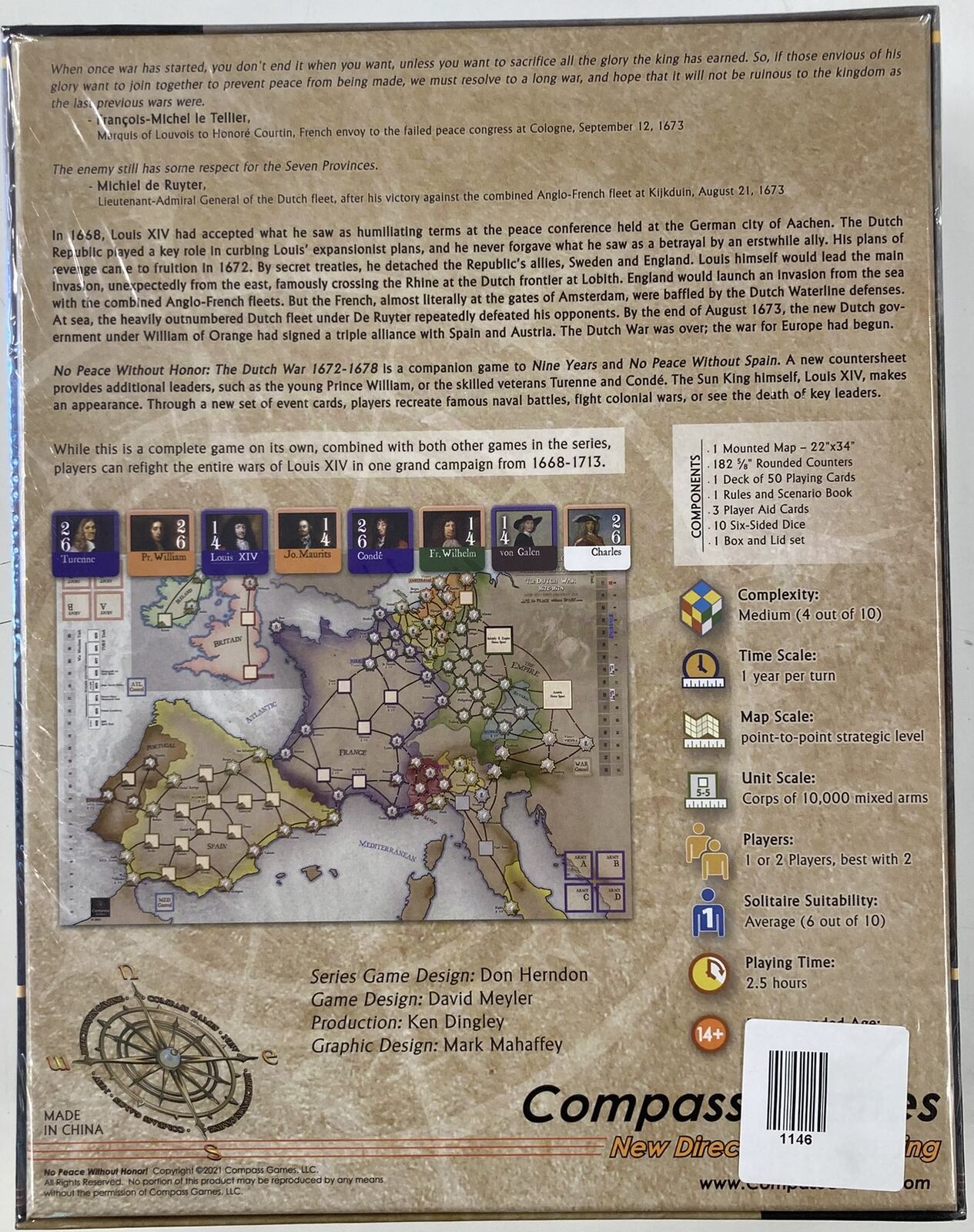



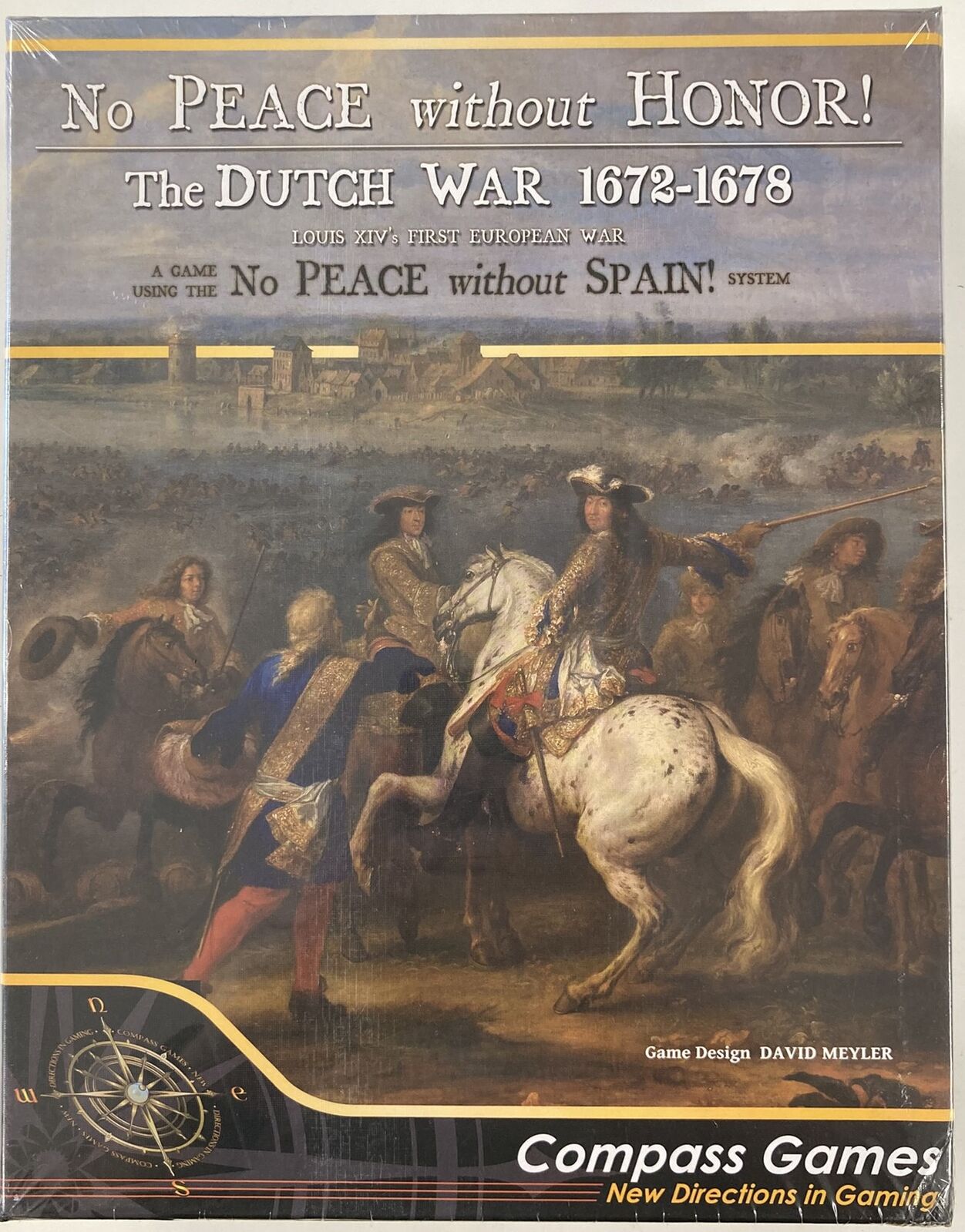
No Peace Without Honor!: The Dutch War 1672–1678 (Second Hand) is a historical strategy wargame exploring one of the most significant European conflicts of the late 17th century. Set during the Franco-Dutch War of 1672–1678, the game places players in the midst of a struggle for political influence, military supremacy, and territorial control as the ambitions of King Louis XIV of France bring much of Europe into conflict.
The war began in 1672 when France, supported by its allies, invaded the Dutch Republic in an attempt to weaken one of its principal commercial and political rivals. What initially appeared to be a relatively straightforward campaign developed into a prolonged international struggle involving the Dutch Republic, Spain, Brandenburg, the Holy Roman Empire, and other European powers. The conflict would reshape the political and military balance of Western Europe and establish the foundations for further wars during the reign of Louis XIV.
No Peace Without Honor! brings this turbulent period to the tabletop, offering historical wargaming enthusiasts an opportunity to examine the strategic challenges faced by the competing powers. Players must consider the importance of military campaigns, territorial objectives, political alliances, and the difficulties of sustaining warfare across multiple theatres of operations.
For collectors and enthusiasts of early modern European military history, this title offers an opportunity to explore the Dutch War, a conflict that helped establish France as Europe's dominant continental military power while demonstrating the resilience of the Dutch Republic and the growing importance of multinational coalitions.
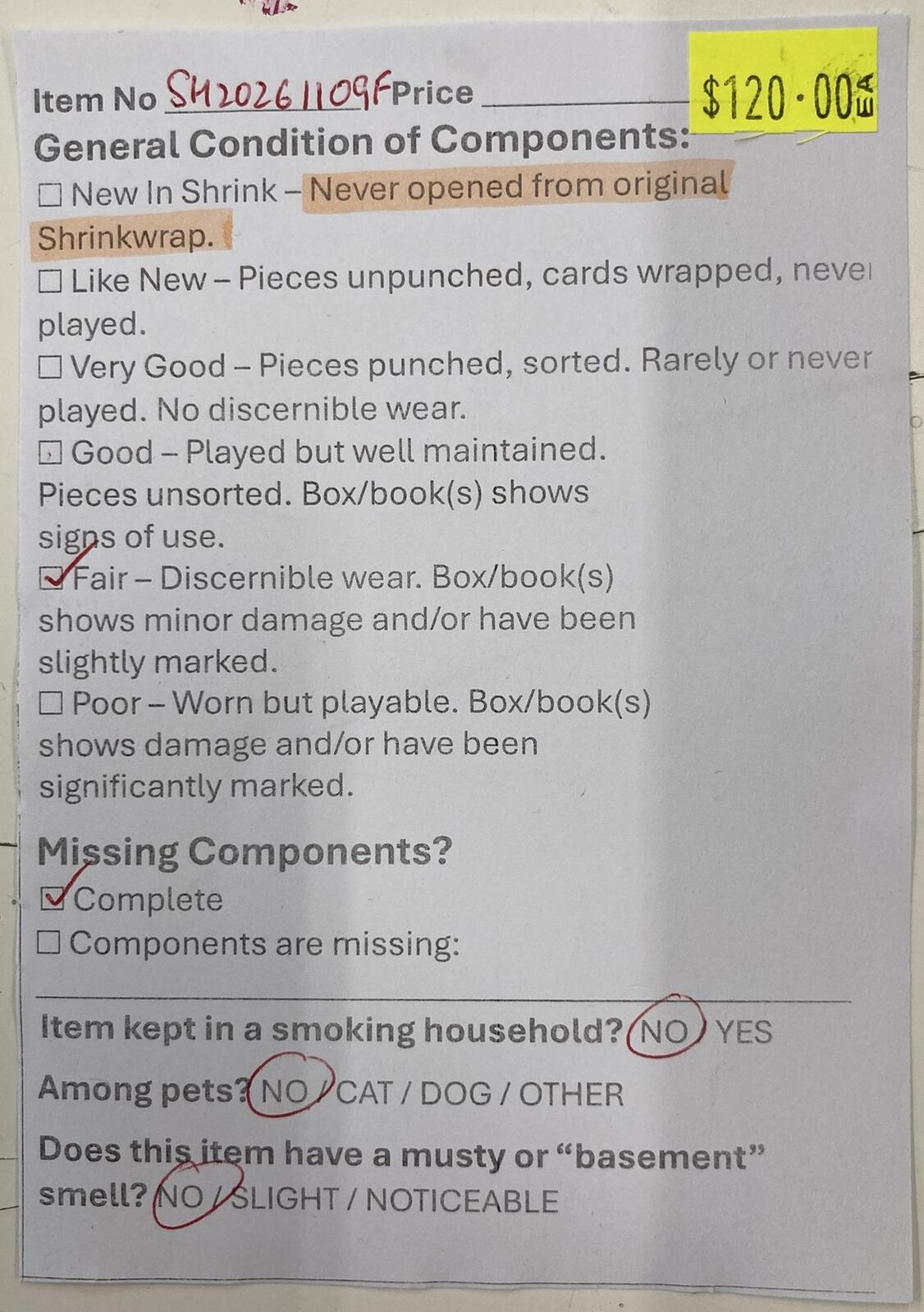
Second Hand: This listing is for a pre-owned copy of No Peace Without Honor!: The Dutch War 1672–1678. The specific physical condition and component completeness of this copy have not been supplied.
The Franco-Dutch War was one of the defining conflicts of 17th-century Europe, bringing together many of the continent's major powers in a prolonged struggle for territory, influence, and political advantage.
At the centre of the conflict was Louis XIV of France, whose expansionist ambitions threatened the established balance of power.
The Dutch Republic had emerged as a major commercial and maritime power during the 17th century. Its trading networks, financial resources, and overseas possessions made it an influential participant in European politics.
However, its wealth and strategic position also made it a target for neighbouring states seeking to limit Dutch influence.
In 1672, French forces invaded the Dutch Republic in a campaign that initially achieved dramatic successes.
The invasion triggered a political and military crisis remembered in Dutch history as the Rampjaar, or Disaster Year.
Despite the severity of the initial defeats, the Dutch managed to resist complete conquest, employing defensive measures that included flooding parts of the countryside to obstruct the advancing armies.
As the war continued, additional European powers entered the conflict, transforming it into a much broader struggle.
During the reign of Louis XIV, France possessed one of Europe's most formidable military establishments.
The French monarchy had invested heavily in military organisation, fortifications, logistics, and the development of a powerful standing army.
French commanders sought to exploit these advantages through coordinated campaigns designed to secure strategically important territories and weaken opposing states.
However, the geographical and political complexity of the conflict created substantial challenges.
Military success did not necessarily produce a decisive political settlement, particularly as additional states joined the opposition to French expansion.
The Dutch War illustrates the difficulties of converting battlefield victories into lasting strategic success when confronted by determined resistance and an expanding coalition of enemies.
For the Dutch Republic, the events of 1672 represented an existential crisis.
French armies advanced into Dutch territory while other enemies threatened the Republic from different directions.
The Dutch response required extraordinary political and military measures, including the use of defensive flooding and the reorganisation of leadership.
William III of Orange emerged as a central figure in the Dutch resistance and would become one of the most important European political and military leaders of his generation.
Under his leadership, the Dutch continued their resistance while seeking additional allies to counterbalance French military power.
The conflict demonstrates how defensive geography, financial resources, diplomacy, and political determination could influence the outcome of warfare even when an opponent possessed superior military strength.
Although the conflict began as a confrontation between France and the Dutch Republic, it quickly expanded into a wider European war.
The involvement of Spain, Brandenburg, the Holy Roman Empire, and other powers created a complex strategic environment in which military operations in one region could influence events elsewhere.
Campaigns were fought across the Low Countries, the Rhineland, and other contested territories.
Commanders faced the challenge of coordinating armies, defending important fortresses, and maintaining supply lines across extensive operational areas.
The war also demonstrated the growing importance of diplomacy and coalition warfare.
Political agreements and shifting alliances could be just as significant as military victories, particularly when the competing powers possessed different strategic objectives.
European warfare during the late 17th century was characterised by the growing importance of fortified positions and organised siege operations.
Armies frequently sought to capture strategically important towns and fortresses rather than relying exclusively on decisive field battles.
Control of fortified locations could secure supply routes, protect borders, and provide bases for future operations.
However, sieges required substantial resources and could consume valuable campaigning time.
The Dutch War provides a fascinating historical setting for examining the relationship between mobile armies, fortified positions, and the strategic objectives of competing governments.
For historical wargamers, these considerations make the period particularly interesting because successful military planning required more than simply concentrating forces for battle.
The conflict featured several prominent military and political figures whose decisions shaped the course of the war.
Louis XIV directed French policy and pursued the territorial ambitions of the Bourbon monarchy.
William III of Orange played a central role in organising Dutch resistance and developing the alliances necessary to confront France.
Henri de la Tour d'Auvergne, Vicomte de Turenne, was one of France's most distinguished commanders, renowned for his operational skill and military experience.
Louis II de Bourbon, Prince de Condé, was another important French commander whose career included major victories and campaigns during the period.
On the opposing side, commanders such as Raimondo Montecuccoli contributed to the wider military struggle against French expansion.
These historical personalities reflect the importance of leadership, military experience, and political influence during the conflict.
The late 17th century was a period of significant military development.
European armies were becoming increasingly professional, while governments devoted substantial resources to maintaining permanent military establishments.
Infantry, cavalry, and artillery all played important roles in military operations, but the effectiveness of an army also depended upon its organisation, supply arrangements, and command structure.
Campaigning was frequently constrained by weather, geography, the availability of supplies, and the need to protect strategically important positions.
The Dutch War provides a valuable historical setting for examining these challenges.
Military decisions had to be considered within the broader context of political objectives, financial limitations, and the actions of allied and opposing powers.
The Dutch War concluded in 1678 with the Treaties of Nijmegen, although associated diplomatic settlements continued into the following year.
France emerged with important territorial gains, strengthening its position as a leading continental power.
However, the conflict also demonstrated the ability of European states to organise coalitions against French expansion.
The political relationships and strategic concerns established during this period would influence subsequent conflicts, including the Nine Years' War and the War of the Spanish Succession.
For students of European military history, the Dutch War provides an important link between the conflicts of the mid-17th century and the great coalition wars of the early 18th century.
No Peace Without Honor!: The Dutch War 1672–1678 is particularly appealing to players interested in historical conflicts that receive less attention than the Napoleonic Wars or the major campaigns of the 20th century.
The Franco-Dutch War offers a compelling combination of military operations, diplomatic manoeuvring, territorial ambition, and coalition politics.
Its historical setting will interest enthusiasts of the age of Louis XIV, the development of early modern armies, and the changing balance of power in Europe.
The game also provides an opportunity to explore a conflict in which the outcome was influenced by geography, fortifications, military leadership, and the determination of states to continue fighting despite substantial losses.
Historical board wargames cover an enormous range of conflicts, but the wars of Louis XIV remain a comparatively specialised subject.
For collectors, titles dealing with this period provide an interesting opportunity to expand beyond more familiar historical settings.
No Peace Without Honor! focuses on a war that helped define the political and military landscape of late 17th-century Europe.
It is an appealing addition to a collection centred on early modern warfare, European military history, or strategic conflict simulations.
This listing is for a second-hand copy of No Peace Without Honor!: The Dutch War 1672–1678.
As a pre-owned historical wargame, it may show signs of previous handling, storage, or play.
The specific condition, component completeness, and previous household environment have not been confirmed for this listing.
No particular condition grade or completeness guarantee is implied by this description.
Explore the struggle for European supremacy during the reign of Louis XIV. No Peace Without Honor!: The Dutch War 1672–1678 (Second Hand) brings attention to a fascinating period of military and political history, making it an interesting addition to the collection of any enthusiast of historical strategy wargames and early modern European warfare.
| SKU | SH20261109F |
| Barcode # | 2000000011271 |
| Brand | Compass Games |
Help other Milsims Games users shop smarter by writing reviews for products you have purchased.
Write a reviewMake 4 interest-free payments of $30.00 fortnightly and receive your order now.
No Peace Without Honor!: The Dutch War 1672–1678 (Second Hand) is a historical strategy wargame exploring one of the most significant European conflicts of the late 17th century. Set during the Franco-Dutch War of 1672–1678, the game places players in the midst of a struggle for political influence, military supremacy, and territorial control as the ambitions of King Louis XIV of France bring much of Europe into conflict.
The war began in 1672 when France, supported by its allies, invaded the Dutch Republic in an attempt to weaken one of its principal commercial and political rivals. What initially appeared to be a relatively straightforward campaign developed into a prolonged international struggle involving the Dutch Republic, Spain, Brandenburg, the Holy Roman Empire, and other European powers. The conflict would reshape the political and military balance of Western Europe and establish the foundations for further wars during the reign of Louis XIV.
No Peace Without Honor! brings this turbulent period to the tabletop, offering historical wargaming enthusiasts an opportunity to examine the strategic challenges faced by the competing powers. Players must consider the importance of military campaigns, territorial objectives, political alliances, and the difficulties of sustaining warfare across multiple theatres of operations.
For collectors and enthusiasts of early modern European military history, this title offers an opportunity to explore the Dutch War, a conflict that helped establish France as Europe's dominant continental military power while demonstrating the resilience of the Dutch Republic and the growing importance of multinational coalitions.
Second Hand: This listing is for a pre-owned copy of No Peace Without Honor!: The Dutch War 1672–1678. The specific physical condition and component completeness of this copy have not been supplied.
The Franco-Dutch War was one of the defining conflicts of 17th-century Europe, bringing together many of the continent's major powers in a prolonged struggle for territory, influence, and political advantage.
At the centre of the conflict was Louis XIV of France, whose expansionist ambitions threatened the established balance of power.
The Dutch Republic had emerged as a major commercial and maritime power during the 17th century. Its trading networks, financial resources, and overseas possessions made it an influential participant in European politics.
However, its wealth and strategic position also made it a target for neighbouring states seeking to limit Dutch influence.
In 1672, French forces invaded the Dutch Republic in a campaign that initially achieved dramatic successes.
The invasion triggered a political and military crisis remembered in Dutch history as the Rampjaar, or Disaster Year.
Despite the severity of the initial defeats, the Dutch managed to resist complete conquest, employing defensive measures that included flooding parts of the countryside to obstruct the advancing armies.
As the war continued, additional European powers entered the conflict, transforming it into a much broader struggle.
During the reign of Louis XIV, France possessed one of Europe's most formidable military establishments.
The French monarchy had invested heavily in military organisation, fortifications, logistics, and the development of a powerful standing army.
French commanders sought to exploit these advantages through coordinated campaigns designed to secure strategically important territories and weaken opposing states.
However, the geographical and political complexity of the conflict created substantial challenges.
Military success did not necessarily produce a decisive political settlement, particularly as additional states joined the opposition to French expansion.
The Dutch War illustrates the difficulties of converting battlefield victories into lasting strategic success when confronted by determined resistance and an expanding coalition of enemies.
For the Dutch Republic, the events of 1672 represented an existential crisis.
French armies advanced into Dutch territory while other enemies threatened the Republic from different directions.
The Dutch response required extraordinary political and military measures, including the use of defensive flooding and the reorganisation of leadership.
William III of Orange emerged as a central figure in the Dutch resistance and would become one of the most important European political and military leaders of his generation.
Under his leadership, the Dutch continued their resistance while seeking additional allies to counterbalance French military power.
The conflict demonstrates how defensive geography, financial resources, diplomacy, and political determination could influence the outcome of warfare even when an opponent possessed superior military strength.
Although the conflict began as a confrontation between France and the Dutch Republic, it quickly expanded into a wider European war.
The involvement of Spain, Brandenburg, the Holy Roman Empire, and other powers created a complex strategic environment in which military operations in one region could influence events elsewhere.
Campaigns were fought across the Low Countries, the Rhineland, and other contested territories.
Commanders faced the challenge of coordinating armies, defending important fortresses, and maintaining supply lines across extensive operational areas.
The war also demonstrated the growing importance of diplomacy and coalition warfare.
Political agreements and shifting alliances could be just as significant as military victories, particularly when the competing powers possessed different strategic objectives.
European warfare during the late 17th century was characterised by the growing importance of fortified positions and organised siege operations.
Armies frequently sought to capture strategically important towns and fortresses rather than relying exclusively on decisive field battles.
Control of fortified locations could secure supply routes, protect borders, and provide bases for future operations.
However, sieges required substantial resources and could consume valuable campaigning time.
The Dutch War provides a fascinating historical setting for examining the relationship between mobile armies, fortified positions, and the strategic objectives of competing governments.
For historical wargamers, these considerations make the period particularly interesting because successful military planning required more than simply concentrating forces for battle.
The conflict featured several prominent military and political figures whose decisions shaped the course of the war.
Louis XIV directed French policy and pursued the territorial ambitions of the Bourbon monarchy.
William III of Orange played a central role in organising Dutch resistance and developing the alliances necessary to confront France.
Henri de la Tour d'Auvergne, Vicomte de Turenne, was one of France's most distinguished commanders, renowned for his operational skill and military experience.
Louis II de Bourbon, Prince de Condé, was another important French commander whose career included major victories and campaigns during the period.
On the opposing side, commanders such as Raimondo Montecuccoli contributed to the wider military struggle against French expansion.
These historical personalities reflect the importance of leadership, military experience, and political influence during the conflict.
The late 17th century was a period of significant military development.
European armies were becoming increasingly professional, while governments devoted substantial resources to maintaining permanent military establishments.
Infantry, cavalry, and artillery all played important roles in military operations, but the effectiveness of an army also depended upon its organisation, supply arrangements, and command structure.
Campaigning was frequently constrained by weather, geography, the availability of supplies, and the need to protect strategically important positions.
The Dutch War provides a valuable historical setting for examining these challenges.
Military decisions had to be considered within the broader context of political objectives, financial limitations, and the actions of allied and opposing powers.
The Dutch War concluded in 1678 with the Treaties of Nijmegen, although associated diplomatic settlements continued into the following year.
France emerged with important territorial gains, strengthening its position as a leading continental power.
However, the conflict also demonstrated the ability of European states to organise coalitions against French expansion.
The political relationships and strategic concerns established during this period would influence subsequent conflicts, including the Nine Years' War and the War of the Spanish Succession.
For students of European military history, the Dutch War provides an important link between the conflicts of the mid-17th century and the great coalition wars of the early 18th century.
No Peace Without Honor!: The Dutch War 1672–1678 is particularly appealing to players interested in historical conflicts that receive less attention than the Napoleonic Wars or the major campaigns of the 20th century.
The Franco-Dutch War offers a compelling combination of military operations, diplomatic manoeuvring, territorial ambition, and coalition politics.
Its historical setting will interest enthusiasts of the age of Louis XIV, the development of early modern armies, and the changing balance of power in Europe.
The game also provides an opportunity to explore a conflict in which the outcome was influenced by geography, fortifications, military leadership, and the determination of states to continue fighting despite substantial losses.
Historical board wargames cover an enormous range of conflicts, but the wars of Louis XIV remain a comparatively specialised subject.
For collectors, titles dealing with this period provide an interesting opportunity to expand beyond more familiar historical settings.
No Peace Without Honor! focuses on a war that helped define the political and military landscape of late 17th-century Europe.
It is an appealing addition to a collection centred on early modern warfare, European military history, or strategic conflict simulations.
This listing is for a second-hand copy of No Peace Without Honor!: The Dutch War 1672–1678.
As a pre-owned historical wargame, it may show signs of previous handling, storage, or play.
The specific condition, component completeness, and previous household environment have not been confirmed for this listing.
No particular condition grade or completeness guarantee is implied by this description.
Explore the struggle for European supremacy during the reign of Louis XIV. No Peace Without Honor!: The Dutch War 1672–1678 (Second Hand) brings attention to a fascinating period of military and political history, making it an interesting addition to the collection of any enthusiast of historical strategy wargames and early modern European warfare.
| SKU | SH20261109F |
| Barcode # | 2000000011271 |
| Brand | Compass Games |
Help other Milsims Games users shop smarter by writing reviews for products you have purchased.
Write a review


Add your favourites to cart

Select Afterpay at checkout

Log into or create your Afterpay account, with instant approval decision

Your purchase will be split into 4 payments, payable every 2 weeks
All you need to apply is to have a debit or credit card, to be over 18 years of age, and to be a resident of country offering Afterpay
Late fees and additional eligibility criteria apply. The first payment may be due at the time of purchase
For complete terms visit afterpay.com/terms